Relax I Can Fix It: A Designer’s Embroidery Review
As a designer who has spent countless hours digitizing and stitching out files for clients, I have learned that the difference between a charming handmade item and a professional-grade product often lies in the source file. When I first loaded Relax I Can Fix It - Funny SVG into my workflow, I wasn’t just looking at a graphic; I was evaluating its potential as a viable machine embroidery design for real-world applications. This isn’t just about having a cute phrase; it is about understanding how those vector lines translate into thread on fabric.
First Impressions and Visual Personality
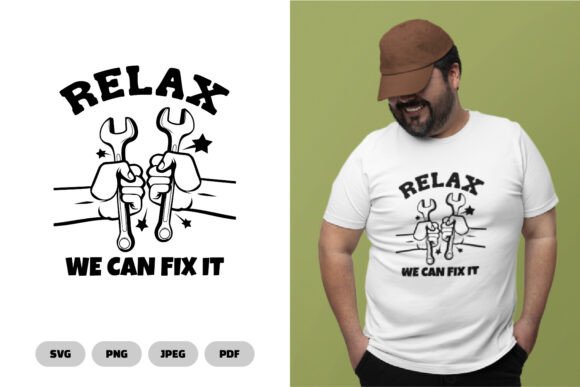
The immediate mood of this piece is reassuring yet playful. In the world of Crafts, humor sells, but only if it is legible and well-balanced. The layout of Relax I Can Fix It - Funny SVG suggests a casual, approachable vibe that fits perfectly with the current trend of self-deprecating yet confident humor in home decor and apparel. From a visual standpoint, the shapes appear clean, which is critical when we move from screen to needle.
For an Etsy seller or a small shop owner, the visual personality of your design assets defines your brand. This particular graphic feels versatile. It doesn’t scream "novelty gift" in a cheap way; instead, it offers a witty commentary that appeals to DIY enthusiasts, engineers, crafters, and anyone who takes pride in their ability to solve problems. When I imagine this stitched out, I see it working beautifully as a statement piece on a canvas tote or a subtle accent on a work apron.
Real-World Application: The Custom Tote Scenario
To truly test the viability of any embroidery file, I mentally run it through a specific project scenario. Let’s say I am preparing a custom order for a local maker’s market. The client wants a sturdy cotton canvas tote bag design that appeals to fellow creatives. They want something that says, "I’ve got this," without being overly serious.
Using Relax I Can Fix It - Funny SVG here makes sense. The text-based nature of the design allows for clear readability from a distance. However, because this is originally a vector SVG intended for digital art and Graphics, I must consider the translation process. If I were using this for a cut file, it would be straightforward. For embroidery, I need to ensure the digitization respects the original curves. If the letters are too thin, they might get lost in the fabric texture of a heavy canvas. If they are too dense, the bag might pucker.
In this scenario, I would likely pair the text with a simple border or frame to give it structure. This turns a simple phrase into a cohesive embroidered patch aesthetic, even if it is stitched directly onto the fabric. The result is a handmade product that feels thoughtful and high-quality, increasing the perceived value for the buyer.
Stitching Considerations and Technical Challenges
While the concept is strong, the technical execution requires careful planning. Since the source is described as a unique vector SVG Clipart, it is essential to verify how it converts to stitch data. Here are the critical factors I evaluate before hitting "start" on the machine:
- Stitch Density: Text designs can easily become too dense if not properly programmed. High density leads to stiffness and potential fabric distortion. I always check if the design uses appropriate fill stitch patterns or if it relies on satin stitch columns for the lettering.
- Small Details: If the SVG includes intricate decorative elements around the text, these might not survive the stitching process on textured fabrics. Tiny corners can get buried under thread buildup.
- Hoop Size: Confirming the final dimensions is crucial. A design that looks great on a 5x7 hoop might feel cramped on a 4x4, or lost on an 8x8. Always measure the actual stitched output, not just the digital preview.
- Stabilizer Choice: For a phrase like this, stability is key to keeping the letters straight. On stretchy fabrics like sweatshirts, a cut-away stabilizer is non-negotiable to prevent the text from warping after washing.
If you are converting this SVG yourself, pay close attention to node reduction. Too many nodes can cause your machine to stutter, resulting in uneven running stitch outlines. A smooth path equals a smooth stitch-out.
Fabric and Product Suitability
Not every surface is created equal. Relax I Can Fix It - Funny SVG shines best on stable, medium-weight fabrics. Here is where it works and where you should proceed with caution:
Ideal Surfaces
- Cotton Canvas and Denim: These fabrics provide a solid foundation for text-heavy designs. The contrast between the thread and the fabric weave enhances readability.
- Kitchen Towels and Aprons: Perfect for holiday embroidery or housewarming gifts. The humorous tone fits the casual utility of these items.
- Pillow Covers: A great spot for a decorative accent. Ensure the design is centered and balanced to maintain the aesthetic of the room.
Surfaces Requiring Care
Be cautious when applying this to baby embroidery items. Soft, delicate fabrics require lighter stitch densities to avoid irritation. Also, avoid placing complex text on highly curved surfaces like caps unless you have extensive experience with cap frames and specialized digitizing. The distortion on a curved brim can make text difficult to read.
Commercial Value and Brand Consistency
For commercial embroidery projects, consistency is everything. Using a reliable design like this helps build trust with your customers. When a buyer sees crisp, clean lettering, they associate that quality with your brand. Whether you are selling custom apparel or personalized gifts, the professionalism of the stitch-out reflects directly on your business reputation.
Moreover, this design has high "giftability." It appeals to a wide demographic, from dads who fix things around the house to moms who manage chaotic households. By offering this on various products—like a sweatshirt embroidery piece or a cozy blanket—you expand your market reach without needing to create entirely new designs from scratch.
Practical Designer Notes
Before you commit to a full production run or list this as a small shop product, follow these steps:
- Test on Scrap Fabric: Always stitch a sample on the exact fabric type you intend to sell. Thread tension and fabric pull vary significantly between materials.
- Check Thread Contrast: View your design in black and white mockups. If the design relies solely on color to define shapes, it may fail when stitched in monochrome. Ensure the lines are distinct regardless of thread choice.
- Verify Licensing: Since this is a digital asset, confirm the license terms. Can you use it for physical goods? Can you sell the digital file itself? Most commercial licenses allow for finished physical products but restrict the resale of the digital file. Always clarify this to protect your craft business.
- Inspect Small Details: Zoom in on the digitized version. Look for overlapping stitches or unnecessary jump stitches that could slow down production.
In conclusion, Relax I Can Fix It - Funny SVG offers a solid foundation for creative projects when handled with technical care. It bridges the gap between digital Graphics and tactile Crafts, providing a humorous and relatable element to your embroidery project. By respecting the limitations of the medium and prioritizing stitch quality, you can transform this simple vector into a standout finished product that resonates with customers and elevates your portfolio.